This safety alert is for those carrying out or responsible for work on vehicles with air suspension systems. This includes motor vehicle repair workshops, the roadside repair and recovery industry and customer sites where this work is undertaken.
HSE have investigated several serious incidents involving air suspension systems on vehicles. The two main causes are collapse of inadequately supported vehicles and unintended rupture or release of components from the air suspension system.
You should
• Undertake minimal repair work at the roadside or third-party premises. The best place to undertake such work is at an adequately equipped vehicle repair facility.
• Prevent movement of air suspension, either by deflating the system or by using suitably rated props or stands to prevent the chassis lowering. Under no circumstances should air suspension be relied upon to maintain a vehicle’s ride height or position whilst people gain access to areas where they may become trapped.
• Exhaust the air from the air suspension system before working on it.
• Isolate the air suspension system by physical disconnection of the air supply before working on it. You should not use clamping of air suspension pipework as a means of temporary isolation as it is not secure.
Introduction
Vehicles are commonly fitted with air suspension, including buses and coaches, refuse vehicles, goods vehicles and tankers. On a vehicle with an air suspension system, inflated rubber bellows (also known as airbags) are supplied with air from the vehicle’s air compressor via a storage system. These take the place of conventional springs at each wheel or axle and automatically ensure a consistent ride height, regardless of the load being carried. A typical set up is shown in Figure 1.
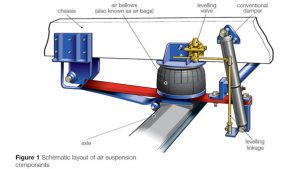
Whilst these are produced by numerous manufacturers the hazards are common including;
Clearance suddenly and unexpectedly changing due to a drop in air pressure, automatic movements or air bellows rupturing or deflating. This presents a crushing hazard to those working in a position where they may become trapped eg underneath the vehicle or between the wheel and chassis.
Work on pressurised systems resulting in violent ejection of parts under pressure and failure of components which may become projectiles.
Background
HSE have investigated several serious incidents, including fatalities, involving air suspension systems on vehicles that have failed. Causes of the incidents have included;
Work being carried out on vehicles supported by the air suspension system and the airbags have catastrophically failed.
Work has been carried out on the suspension control system or vehicle sensors and unexpected suspension movement has occurred.
Work has been carried out without de-pressurising the air suspension system and the pneumatic air bag or associated components have ejected or ruptured.
Action required
Those carrying out or responsible for work on vehicles fitted with air suspension systems should:
Ensure tasks are adequately planned. This includes; confirming the configuration of the particular suspension system, assessing the risks associated with each task, explaining each task so it is fully understood by the technician, providing the necessary equipment to undertake the job safely and developing safe systems of work. These should take into account the specific tasks and control measures required. You should support your staff if they are being put under pressure by third parties to work in an unsafe manner.
Undertake minimal repair work at the roadside or third-party premises. The best place to undertake such work is at an adequately equipped vehicle repair facility.
When working on vehicles with air suspension systems
Prevent movement of suspension, either by fully deflating the system or by using suitably rated props or stands to prevent the chassis lowering. Under no circumstances should air suspension be relied upon to maintain a vehicle’s ride height or position whilst people gain access to areas where they may become trapped.
If you are working near a lifting axle it should be isolated as it can move without notice.
Carry out a visual check of the configuration and condition of the air suspension system.
When working on the air suspension system itself
Undertake the actions above for working on vehicles with air suspension systems.
Exhaust the air from the air suspension system before working on it.
Isolate the system by physical disconnection of the air supply. The practice of temporary isolation by clamping of air suspension pipework (such as by mole grips) does not provide a secure isolation. In addition determine whether dissipation of stored air in the suspension system is required.
For leak testing, visually inspect the empty system, then inflate and raise to full travel, leave a short period of time before inspecting for leaks. Should damage be identified, exhaust the air from the system before carrying out repairs.
Relevant Legal Documents
Health and Safety at Work etc Act 1974, Sections 2 (1) and 3 (1).
References
Safe recovery (and repair) of buses and coaches fitted with air suspension (Guidance Note PM85)(Whilst this specifically relates to buses and coaches, there are minimal material differences between the systems on other vehicles, therefore this guidance can be applied to other vehicle types)
Health and safety in motor vehicle repair and associated industries (Guidance HSG 261)
General note
Please pass this information to others who carry out or are responsible for work undertaken on vehicles with air suspension systems and those operating premises where this work is undertaken.

Legionellosis is a collective term for diseases caused by legionella bacteria including the most serious Legionnaires’ disease, as well as the similar but less serious conditions of Pontiac fever and Lochgoilhead fever. Legionnaires’ disease is a potentially fatal form of pneumonia and everyone is susceptible to infection. The risk increases with age but some people are at higher risk including:
a) people over 45 years of age
b) smokers and heavy drinkers
c) people suffering from chronic respiratory or kidney disease
d) diabetes, lung and heart disease
e) anyone with an impaired immune system
The bacterium Legionella pneumophila and related bacteria are common in natural water sources such as rivers, lakes and reservoirs, but usually in low numbers. They may also be found within a companies hot and cold water systems.
Where does it come from?
Legionella bacteria are widespread in natural water systems, e.g. rivers and ponds. However, the conditions are rarely right for people to catch the disease from these sources. Outbreaks of the illness occur from exposure to legionella growing in purpose-built systems where water is maintained at a temperature high enough to encourage growth, e.g. cooling towers, evaporative condensers, hot and cold water systems and spa pools used in all sorts of premises (work and domestic).
How do people get it?
People contract Legionnaires’ disease by inhaling small droplets of water (aerosols), suspended in the air, containing the bacteria. Certain conditions increase the risk from legionella if:
a) the water temperature in all or some parts of the system may be between 20-45 °C, which is suitable for growth
b) it is possible for breathable water droplets to be created and dispersed e.g. aerosol created by a cooling tower, or water outlets
c) water is stored and/or re-circulated
d) there are deposits that can support bacterial growth providing a source of nutrients for the organism e.g. rust, sludge, scale, organic matter and biofilms
The bacteria can multiply in water in temperatures between 20°C – 45°C. As the temperature rises above 60°C the majority of bacteria will be killed within five minutes. Maintaining water temperatures above 50°C and below 20°C is therefore the main method of controlling legionella in domestic water systems as recommended by Health & Safety Authorities.
What should I do?
The incubation period is between 2-10 days so when returning back to work to a partial or unoccupied premises it is recommended to purge showers & water systems at the highest temperature for 5 minutes.
For further information on Legionella then contact us today
Carrying out thorough examination and testing of lifting and pressure equipment during the coronavirus outbreak
HSE recognises the potential challenges when carrying out legal requirements for thorough examination and testing (TE&T) of plant and equipment as a result of additional precautions people need to take to help reduce risk of transmission of coronavirus (COVID-19).
The law for Lifting Operations and Lifting Equipment Regulations (LOLER) and Pressure Systems Safety Regulations (PSSR) remain in place.
The following advice is to help dutyholders (you) ensure that their work plant and equipment remain safe to use. It helps to guide decision making to see if TE&T requirements can still be met.
Maintaining your thorough examination and testing scheme
Ensure social distancing measures in the workplace aren’t perceived to be a barrier to carrying out TE&T – businesses and inspection bodies should cooperate to ensure access to plant and equipment for TE&T continues to schedule.
For businesses that are currently closed, ie they have either elected or been required to do so to meet COVID-19 related government advice or restrictions, you should still give access to visiting inspectors to undertake thorough examinations.
There may be occasions where inspectors are not available to meet the demands of industry and this may lead to difficulties for some businesses fulfilling their obligations for TE&T. Inspectors are supporting GB industry to maintain operations and viability and may have to prioritise critical industries and the protection of equipment aiding vulnerable persons.
If you experience problems in undertaking scheduled thorough examinations as you can’t cannot access inspection services, you should adopt a risk based process to determine the whether there are steps you can to take to safely continue to use equipment (that has not had its scheduled TE&T) or decide to stop using the equipment.
The overarching legal obligation remains, ie ensure that equipment is safe to use
HSE’s enforcement approach during the period of the outbreak
HSE will adopt a pragmatic and proportionate approach towards enforcement action for non-compliance with statutory requirements which are directly attributable to the coronavirus (Covid-19) outbreak.
Our usual enforcement response will be to take no action if the only failing is that TE&T is not carried out by the required date.
Equipment should only be used outside of its test regime if you can demonstrate that it is critical for essential work and that it can still be operated safely.
You must be able to demonstrate that you have made all reasonable attempts to have the TE&T carried out, made a thorough assessment of the increased risk and taken appropriate action to manage it.
For further information on equipment inspections then contact us today

RIDDOR reporting of COVID-19
You must only make a report under RIDDOR (The Reporting of Injuries, Diseases and Dangerous Occurrences Regulations 2013) when:
A) an unintended incident at work has led to someone’s possible or actual exposure to coronavirus. This must be reported as a dangerous occurrence.
B) a worker has been diagnosed as having COVID 19 and there is reasonable evidence that it was caused by exposure at work. This must be reported as a case of disease.
C) a worker dies as a result of occupational exposure to coronavirus.
What to report
Dangerous occurrences
A) RIDDOR regulation 7, Schedule 2 – Section 10
If something happens at work which results in (or could result in) the release or escape of coronavirus you must report this as a dangerous occurrence. An example of a dangerous occurrence would be a lab worker accidentally smashing a glass vial containing coronavirus, leading to people being exposed.
Cases of disease: exposure to a biological agent
B) RIDDOR regulation 9 (b)
If there is reasonable evidence that someone diagnosed with COVID-19 was likely exposed because of their work you must report this as an exposure to a biological agent using the case of disease report. An example of a work-related exposure to coronavirus would be a health care professional who is diagnosed with COVID-19 after treating patients with COVID-19.
Work related fatalities
C) RIDDOR regulation 6 (2)
If someone dies as a result of a work-related exposure to coronavirus and this is confirmed as the likely cause of death by a registered medical practitioner, then you must report this as a death due to exposure to a biological agent using the ‘case of disease’ report form. You must report workplace fatalities to HSE by the quickest practicable means without delay and send a report of that fatality within 10 days of the incident.

This is an extremely worrying time for firms and workers. We know many workers, union reps and employers have questions and concerns about safe working – especially for those continuing to work away from home.
This joint statement between the Health and Safety Executive, the TUC and the CBI is intended to clarify the position. The health and safety of workers remains paramount. Employers are and must continue to provide workers with information about risks to their health and the actions their employers must take.
Social distancing is a key public health measure introduced by Public Health England to reduce the spread of infection. Most employers are going to great lengths to ensure social distancing wherever possible. The HSE, CBI and TUC wish to publicly support these efforts. Firms that can safely stay open and support livelihoods should not be forced to close by misunderstandings about government guidance.
But If it comes to the HSE’s attention that employers are not complying with the relevant Public Health England guidance (including enabling social distancing where it is practical to do so), HSE will consider a range of actions ranging from providing specific advice to employers through to issuing enforcement notices, including prohibition notices.
Where a worker has a genuine concern about health and safety which cannot be resolved through speaking with their employer or trade union, they should contact the relevant enforcement agency – either their local authority, or the HSE Here
For firms who are unsure about the guidance, please visit Here
Drivers will be granted a six-month exemption from MOT testing, allowing people to carry on with essential travel, the Department for Transport (DfT) has announced.
Cars, motorcycles and vans will be granted a MOT exemption that will enable essential travel to work where it cannot be done from home, or shop for necessities.
All cars, motorcycles and vans that require a MOT test will be exempt from needing a test from March 30. The Department for Transport (DfT) urges that vehicles must be kept in a roadworthy condition as drivers could face prosecution if they are driving unsafe vehicles. Advice on keeping a vehicle in a good condition can be found here.
The DfT advises that people should stay at home and avoid travel. The only reasons people should leave their homes is set out in the government guidance.
Transport secretary, Grant Shapps, said: “We must ensure those on the frontline of helping the nation combat COVID19 are able to do so.
“Allowing this temporary exemption from vehicle testing will enable vital services such as deliveries to continue, frontline workers to get to work, and people get essential food and medicine.
“Safety is key, which is why garages will remain open for essential repair work.”
Legislation will be introduced on March 30 and will come into immediate effect for 12 months. Drivers will still need to get their vehicle tested until the new regulations come into place, if they need to use it. Garages will remain open for essential repair work.
If vehicle owners cannot get an MOT as they are in self-isolation, the DfT says it is working with insurers and the police to ensure people aren’t unfairly penalised for things out of their control.
“The temporary MoT exemption is positive as it will allow vital services to continue and aftersales workshops to prioritise essential repair works on critical vehicles”, said Sue Robinson, director of the National Franchised Dealers Association (NFDA), which represents franchised car and commercial vehicle retailers in the UK.
“We welcome the transport secretary’s comments that ‘safety is key’ and aftersales departments will remain open for essential repair work.”
Karen Hilton, chief commercial officer at HeyCar, believes granting the six-month exemption from MOT testing is the right thing to do. She said: “We’re really pleased with the news that MOTs have been scrapped for at least six months. We’ve had queries from concerned customers about what they should do, as taking their car for an MOT seems to conflict with the Government advice to stay at home. People have enough worries in this time of crisis without having to consider how they get their car in for MOT.
“Scrapping the MOT for all vehicles while the country goes through the coronavirus lockdown is the only sensible approach, removing risk for motorists and mechanics alike.
“This isn’t business as usual, we are all being told to stay indoors unless absolutely necessary and while the MOT is vital for all vehicles, especially older ones from a safety point of view, it’s just another one of those appointments that will now have to wait in order to protect the health of the community.
“Many mechanics are small businesses who will be hit hard by the loss of income. There is sure to be a wave of motorists who need an MOT once the exemption is lifted.”
Practical driving tests and annual testing for lorries, buses and coaches have been suspended for up to three months.
For the latest from the Government on MOTs, click here.
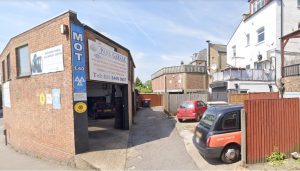
It was great to go and see Hap & his incredibly friendly team at @parkgarageEN5 in Barnet the day before the Coronavirus lockdown. Hap came out of retirement to take on a garage, what he described as “a right dump”, which he has transformed into a great looking business. Congratulations Hap and keep up the fantastic improvements.
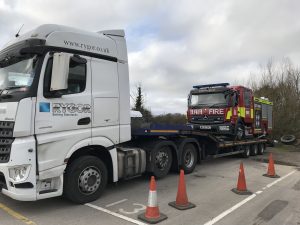
We are delighted to be working with Rygor who regularly supply London Fire Brigade with their newest Fire Appliances. Rygor also maintain and supply vehicles to the National Ambulance Service, the One Police UK & the British Army. Great work during these difficult times.
#staysafe
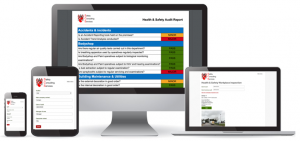
For the past 20 years SCS have been the fore runner in Health & Safety developed software which many of our competitors have regularly copied. Everything can be found with the click of the mouse on our SCS Online© server and with the swipe of a tablet using our incredible App’s.
#healthandsafety #auditing #apps #motortrade #bodyshops #mvr #trucks #cars #automotive #garages
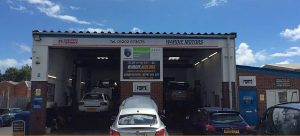
We are delighted to be working alongside the incredibly busy & popular Wardie Motors. It not an understatement that Jamie the owner is probably the friendliest person in the motor trade and its great that more and more smaller garages like his are now embracing health and safety.
Online Training. Providing effective eLearning
Find out more about our training, including the extensive catalogue from our partner iHasco