The Directors of SCS have been assisting hundreds of companies since 1993. Place this poster on your Health & Safety noticeboard.
For the very best in motor trade Health & Safety contact us today

Most of the changes relate to licensing and storage arrangements and requirements. Separate regulations known as the Acetylene Safety (England and Wales and Scotland) Regulations 2014 also came into force and similarly serve to tidy up earlier assorted regulatory requirements. They do not affect acetylene gas stored at a pressure lower than 0.62 bar.
For the very best in motor trade Health & Safety contact us today
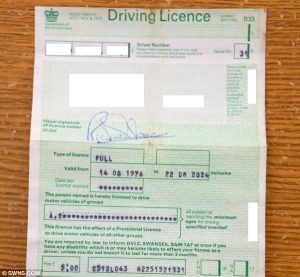
DVLA is consulting various stakeholders about the implications that this will have for employers and others who need to check that a licence remains valid and to check for penalty points. An on-line procedure via a system called View Driver Record (VDR) will be made available for individual record checks, and this will be a chargeable service.
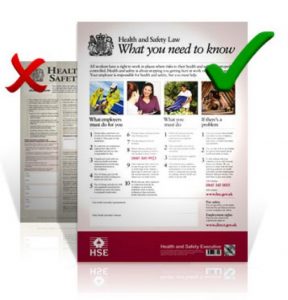
Smaller employers may elect to make the statutory information on the poster available to their employees via an approved leaflet.
For the very best in Health & Safety contact us today

Amendments to the Health and Safety (First Aid) Regulations 1981 are effective from 1 October 2013, to reflect that HSE will no longer have to approve first-aid training providers and the qualifications they offer. Employers still have the same duties to ensure that their first-aid personnel are trained to a suitable level, and that trainers are competent, but are able to select training providers who they see as best suited to their own circumstances.
There are two new documents to explain the provisions and to tidy up previous amendments brought about by other minor changes to the law. These are a revised guidance note L74, “The Health and Safety (First-Aid) Regulations 1981 – Regulations and Guidance” and information booklet GEIS3 called ‘Selecting a first-aid training provider”.
Both are available free of charge at http://www.hse.gov.uk/pubns/books/l74.htm and http://www.hse.gov.uk/pubns/geis3.htm
For the very best in Health & Safety contact us today
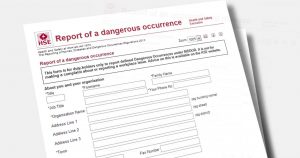
From 1 October, there are changes to the Reporting of Injuries, Diseases and Dangerous Occurrences Regulations 1995 (RIDDOR). The intention is to simplify reporting requirements in areas of major injuries (where there is a shorter list of “specified injuries”), industrial disease (where eight categories of reportable work-related illness replace 47 specified conditions), and dangerous occurrences (fewer types need to be reported).
Reporting requirements for fatalities, accidents to members of the public, and accidents resulting in incapacity from normal work for more than seven days are unchanged. There is also an obligation to record (but not to report) injuries that cause a worker to be incapacitated for more than three days.
For the very best in Health & Safety contact us today
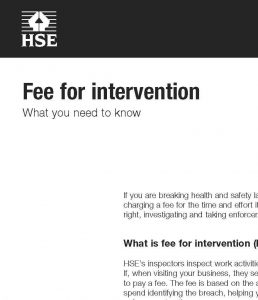
HSE’s new cost recovery scheme, Fee for Intervention (FFI), will come into force on 1st October
Under The Health and Safety (Fees) Regulations 2012, those who break health and safety laws are liable for recovery of HSE’s related costs, including inspection, investigation and taking enforcement action.
The Fee for Intervention hourly rate for 2019 is £129. The many businesses that comply with their legal obligations will continue to pay nothing.
HSE will review how FFI is working after the first twelve months of operation, and within three years of the regime coming into effect. The review reports will be published on this website.
For the very best in Health & Safety contact us today

Most slips and trips are preventable and many happen when spills aren’t cleared up or clutter tidied away. Last year, there were four fatalities and more than 10 000 employees were seriously injured when they had a slip or trip at work. This results in broken bones and time off work, costing the economy around £ 800 million per year. Simple mistakes can shatter lives …. your actions could help stop them from happening.
Don’t take things for granted, cut corners or wait for someone else to do it. Clear up!
For the very best in Health & Safety contact us today
Safety Consulting Services have become the Proud Sponsors of their local amateur boxing club ‘Salisbury City Boxing Club’


As of 6 April 2012, RIDDOR s over-three-day injury reporting requirement has changed. The trigger point has increased from over three days to over seven days incapacitation (not counting the day on which the accident happened).
Incapacitation means that the worker is absent or is unable to do work that they would reasonably be expected to do as part of their normal work.
Employers and others with responsibilities under RIDDOR must still keep a record of all over three day injuries if the employer has to keep an accident book, then this record will be enough.
The deadline by which the over-seven-day injury must be reported has also increased to fifteen days from the day of the accident.
For the very best in Health & Safety contact us today
Online Training. Providing effective eLearning
Find out more about our training, including the extensive catalogue from our partner iHasco