
Although there are slightly less risks & hazards in a Motorcycle workshop than let say a car, van, bus or truck workshop, we appreciate you still have to satisfy your insurance company & the HSE that your current tasks & practices are safe.
This will usually involve your Insurer & Authorities wanting to see Policies, Procedures and wide range of Risk Assessments along with maintenance of items such as your compressor, extraction equipment, bike lifts/jacks ect.
We assist numerous Motorcycle dealers throughout the UK and would like to offer our services to the rest of this incredible community. This will involve us attending site every 3 months plus actually doing all of the work that is required to satisfy your Insurer & ensure you are Health & Safety Compliant and all for as little as £30 per week.
Contact us today for a free friendly chat.
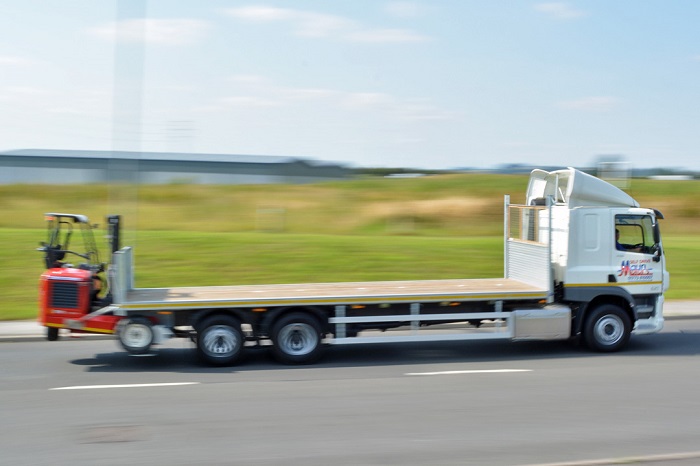
The two Research Reports (RR) can be found from the links below.
RR1078 – The use of vehicle structure in load securing on heavy goods vehicles
This report assesses the legislation applicable to the transport of goods in the UK under both road traffic and health and safety at work legislation. It assesses the guidance available to operators and consignors and the methods of securing loads that are commonly-used at present.
RR1079 – Access to and work on flatbed vehicles
This report describes a multi-disciplinary, mixed-method approach to research on this topic, comprising both quantitative and qualitative analysis, undertaken to establish contributory factors to incidents and areas of concern when accessing or working on flatbed vehicles.
Westminster Magistrates’ Court heard how a worker was servicing a large delivery truck and repairing the driver’s access rope for the cab when he fell, striking his head and losing consciousness. He was placed in a medically induced coma for two-weeks. He still suffers from ongoing complications and has been unable to return to work.
An investigation by the Health and Safety Executive (HSE) found the step ladder that the worker was using was damaged and its anti-slip feet were worn. It was not Volvo property and had not been maintained or checked to ensure it was suitable for use. At the time of the incident, 17 September 2015, Volvo UK had not trained their staff to select, inspect and use access equipment for work at height.
Volvo Group UK Limited, Wedgnock Lane, Warwick, pleaded guilty to breaching Section 2(1) of the Health and Safety at Work Act 1974 and was fined £900,000 and ordered to pay costs of £5820.28, with a £150 victim surcharge.
HSE inspector Nick Wright said, “This worker suffered life changing injuries that could have been prevented by simple health and safety precautions. For two weeks his family was told to prepare for the worst as he was placed in an induced coma to help manage the swelling on his brain.
“This case is not about banning ladders, on many occasions they are the right equipment to use when working at height, it is about companies ensuring they properly maintain their work at height equipment and train their workers on how to inspect them and select the correct tools for the job. As this case shows, even a fall from a relatively small height can have devastating consequences.”
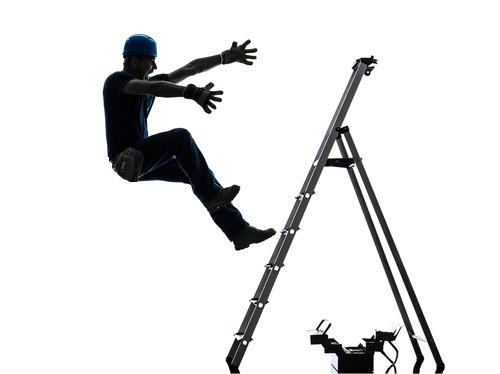
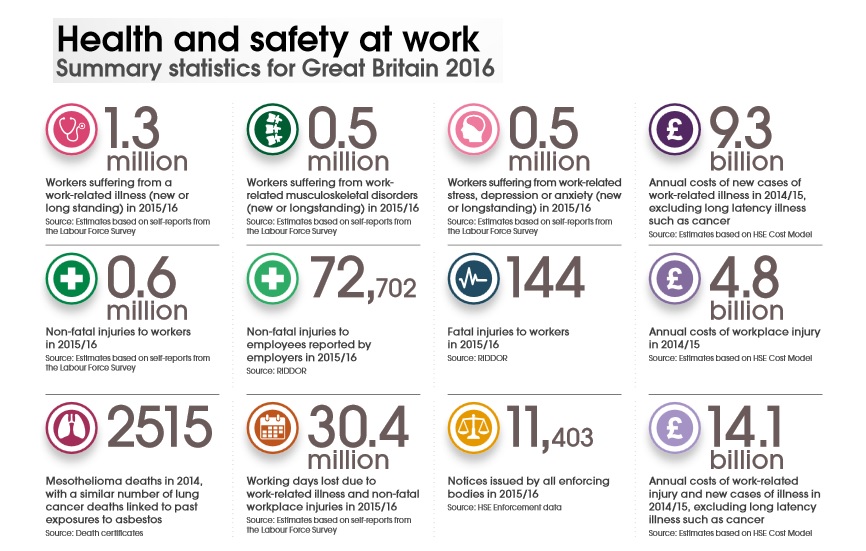
Working days lost due to health & Safety incidents, work place injuries and work related Ill health & disease have dramatically reduced since 1974 due to the hard work and diligence of professionals such as Safety Consulting Services.
Safety Consulting Services are proud to have been assisting hundreds of companies over the past two decades.
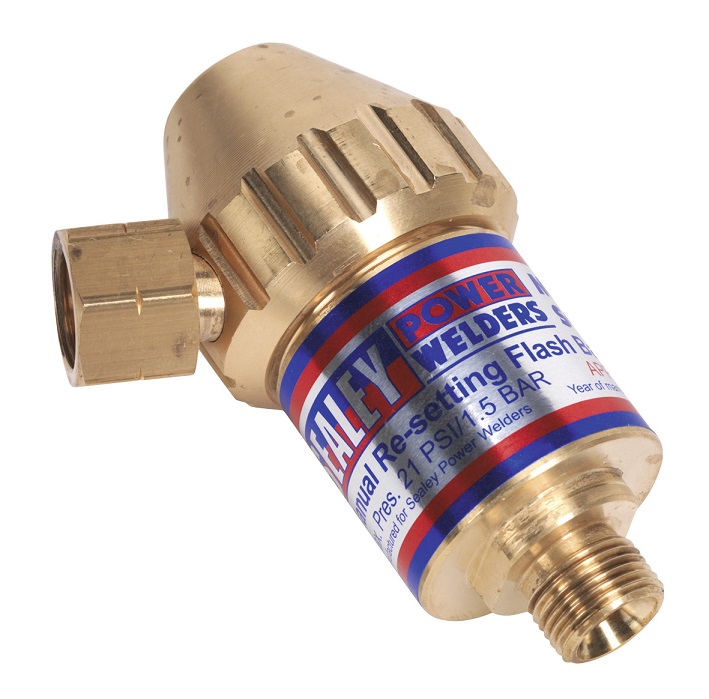
The regulations pertaining to the use and maintenance of oxy-acetylene equipment were updated in late 2014 under The Acetylene Safety (England and Wales and Scotland) Regulations 2014 and included a new mandatory requirement to use suitable flashback arrestors.
But since the regulations were introduced there is concern that the requirement to use flashback arrestors may not have been fully implemented by all welding operators. The requirement for flashback arrestors is a reasonably practicable control of the risk and that is why the law requires them.
Fuel gases are mostly hydrocarbon based and each has its own unique properties. The choice of a fuel gas is based on its ability to burn in air or oxygen and will be dependent on the specific requirements of the job, as well as the location at which it is being used. There are several useful fuel gases used in our industry of which acetylene and propane are the most commonly used.
Please ensure you and your workers are protected by fitting that all mobile systems with a purpose designed regulator for acetylene which should replaced every 5 years, a flashback arrestor incorporating a non-return valve and a pressure and/or temperature sensitive cut-off valve.
More information can be found from the British Compressed Gas Association web site
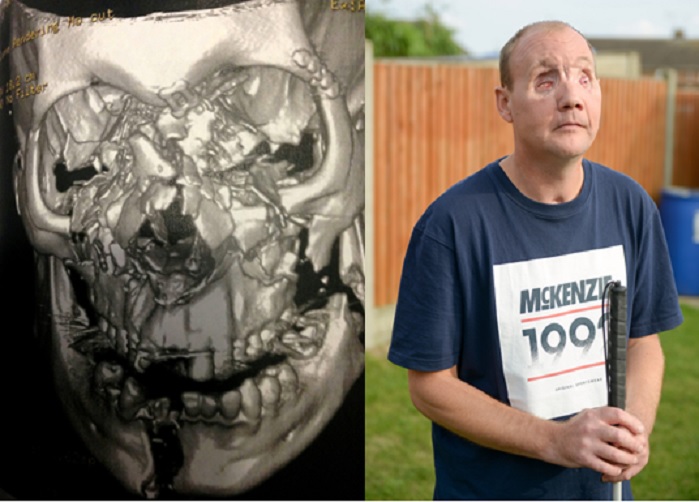
A Kent company who supplies road safety products has been fined after a worker suffered life threatening injuries when a drum he was working on exploded.
Maidstone Crown Court heard how 41 year old Andrew Foster, an employee of Highway Care Limited was using a plasma cutter to cut up a drum that had previously contained a flammable substance. Mr Foster suffered life threatening injuries when the drum exploded in his face causing complex head and brain injuries. He has permanently lost vision in his right eye and now has very limited vision in his left eye.
An investigation by the Health and Safety Executive (HSE) into the incident which occurred on 6 August 2012 found that the company failed to ensure the health and safety of their employees.
Highway Care Limited, of Detling Hill, Maidstone, Kent, pleaded guilty to breaching Section 2(1) of the Health and Safety at Work etc Act 1974 and was fined £660,000 and ordered to pay costs of £33,358.46.
HSE Inspector Caroline Fullman said.
“Andrew Foster has been left with devastating injuries that will impact on the rest of his and his family’s lives. This incident could have resulted in a fatality.
“If a welding torch or plasma cutter is used on a tank or drum that has contained or contains a flammable substance, it can explode. It only takes a small amount of residue to create a potentially flammable atmosphere.
“Mr Foster wants others to learn of the risk of hot work on drums and tanks – he was previously unaware of the risk.”

Why the change? ISO standards are reviewed every five years and revised if needed.
What are the major differences? The most noticeable change to the standard is its new
structure. ISO 9001:2015 now follows the same overall structure as other ISO management system standards (known as the High-Level Structure), making it easier for anyone using multiple management systems.
What benefits does the new version bring? It puts greater emphasis on leadership engagement, helps address organisational risks and opportunities in a structured manner, uses simplified language and a common structure and terms, which are particularly helpful to organisations using multiple management systems, such as those for the environment, Health & Safety, or business continuity, addresses supply chain management more effectively and is more user-friendly for service and knowledge-based organisations.
I am certified to ISO 9001:2008. What should I do? You have a three-year transition period from the date of publication (September 2015) to move to the 2015 version. This means that, after the end of September 2018, a certificate to ISO 9001:2008 will no longer be valid.
I am still using ISO 9001:2008. What should I do? Since it has been revised to meet the needs of today’s business world, we recommend that you update your quality management system to fit the new version. Simple contact us and we will do the rest.
The amount of logo’s in the image speak volumes for the trust given to us by many of the well renowned motor groups with who we currently work. Whether it be a truck, car, motorcycle, van, trailer, bus, coach or even a tractor Safety Consulting Services are the Health & Safety Experts to the Motor Trade.
We are currently working with 3 AM Top 100 car dealers in the UK and after being approached by another from a kind introduction last week it looks like it will be a fourth by September.

The call comes after a farm worker, aged 17, was trapped under a quad bike for an hour with a wound that later needed 17 stitches.
JF & M Bland had contracted the worker for general agricultural duties. He was told to use a quad bike to travel to one of the farm’s fields. He did so without undertaking any training and with no helmet provided for him to wear. The vehicle overturned and it was an hour before one of the partners of the company found him.
After investigating the, HSE decided to prosecute JF & M Bland, for breaches of health and safety laws. The company pleaded guilty to breaching Regulation 9(1) of the Provision and Use of Work Equipment Regulations 1998. The company was fined £6,000 and ordered to pay costs of £4,693.
ATV safety
An ATV is considered to be “any motorised vehicle designed to travel on four low-pressure tyres on unpaved surfaces, with a seat designed to be straddled by the operator and with handlebars for steering control.” They are intended to be used by one person without a passenger.
Hazards:
- Getting thrown off when the ATV overturns or after loss of control;
- Colliding with structures, trees, other vehicles etc;
- Being trapped under an overturned machine;
- Pedestrians being hit by or run over by ATVs.
Causes of accidents and injury with ATVs can include:
- lack of formal training and/or experience;
- incorrect/lack of appropriate head protection;
- excessive speed;
- age of the operator;
- unbalanced loads or overloading;
- tipping on a bank, ditch, rut or bump;
- poor maintenance such as faulty brakes or incorrect tyre pressures
It is a legal requirement for employers to provide adequate training for employees who use work equipment such as ATVs, and to make sure that only employees who have received appropriate training in their safe use, including the use of any towed equipment or attachments, are permitted to ride them. The same requirements apply to the self-employed.
Sit-astride ATVs are not fitted with either a cab or roll bar, so your only protection is what you wear. Head protection is vital. Many ATV fatalities in the UK have been caused by head injuries. Helmets would certainly have prevented most of, if not all, these deaths. You should always wear a helmet when riding an ATV.

The Thames Refinery and the Plaistow Wharf are located one mile from each other in London. The Thames Refinery is the largest sugar refinery in the EU and one of the largest in the world, with a capacity of 1.2million tonnes per annum. The Plaistow Wharf is the home of Lyle’s Golden Syrup with more than a million tins of Lyle’s Golden Syrup leaving the factory every month.
The team know how important the maintenance & safety of their Fleet is to them so they insist that the companies responsible for the maintenance of the vehicles meet very strict Health & Safety criteria to ensure not only the safety of the employees repairing them but also that the trucks can deliver the huge quantities without any complications.
Safety Consulting Services are proud to provide them with just such a solution.
Online Training. Providing effective eLearning
Find out more about our training, including the extensive catalogue from our partner iHasco